Equal vs Custom Shares: Splitting Group Trip Costs the Right Way
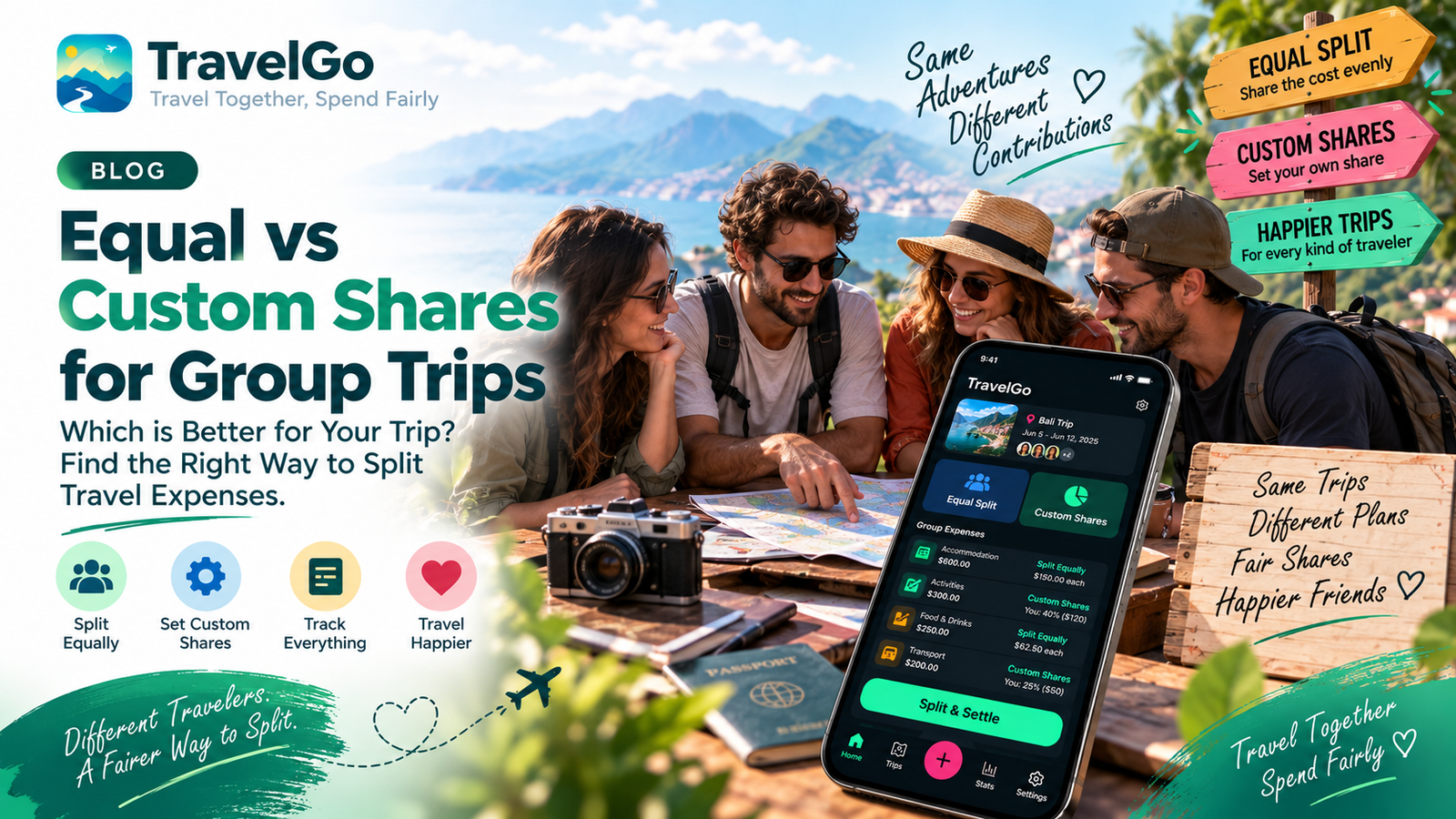
Not every cost splits evenly. Learn when to split group trip expenses equally and when custom shares are fairer — with real examples.
"Let's just split it evenly" is the reflex — and often the right call. But not always. Knowing when to use equal shares and when to use custom ones is the difference between a group that settles up cheerfully and one that quietly keeps score.
When equal shares are right
Split evenly when everyone benefits roughly equally: the apartment everyone sleeps in, the hire car everyone rides in, the group breakfast everyone eats. Equal is simple, fast, and feels fair because it is fair for shared goods.
When custom shares are fairer
Reach for custom shares the moment consumption diverges:
- Not everyone joined. Three people took the boat trip; don't bill the two who stayed back.
- Different consumption. Two friends shared two bottles of wine; the teetotaller shouldn't subsidise them.
- Different rooms. The couple took the ensuite; the solo traveller took the box room. Split the accommodation to match.
A quick worked example
Dinner is 120. Four people ate; all shared two starters (20), but only two had the 40 mains and the rest had 20 mains. Splitting equally overcharges the lighter eaters by a noticeable margin. Custom shares — each person's mains plus a quarter of the starters — settles it fairly in seconds.
Don't over-engineer it
The trap is treating every coffee as a custom-share event. Use equal shares as the default, reserve custom shares for the costs where it genuinely matters, and let the tool do the netting. For the wider system around this, see how to split travel expenses with friends.
TravelGo splits any expense equally or by custom share, tracks part-payments, and shows exactly who owes whom — then nets it down to the fewest transfers. Try it below.
Put this into practice with TravelGo
Track expenses, split bills and settle up with friends — even offline.